Fammart journal
Packing a cold lunch in a reusable snack bag
Pack a cold lunch with two frozen cold sources, one under the food and one on top, inside an insulated bag. USDA calls insulated, soft-sided bags the best choice, yet it asks for those two cold sources in any lunch bag that carries perishable food. Eat the lunch or get it into a fridge within 2 hours, and within 1 hour on a day above 90 degrees F.
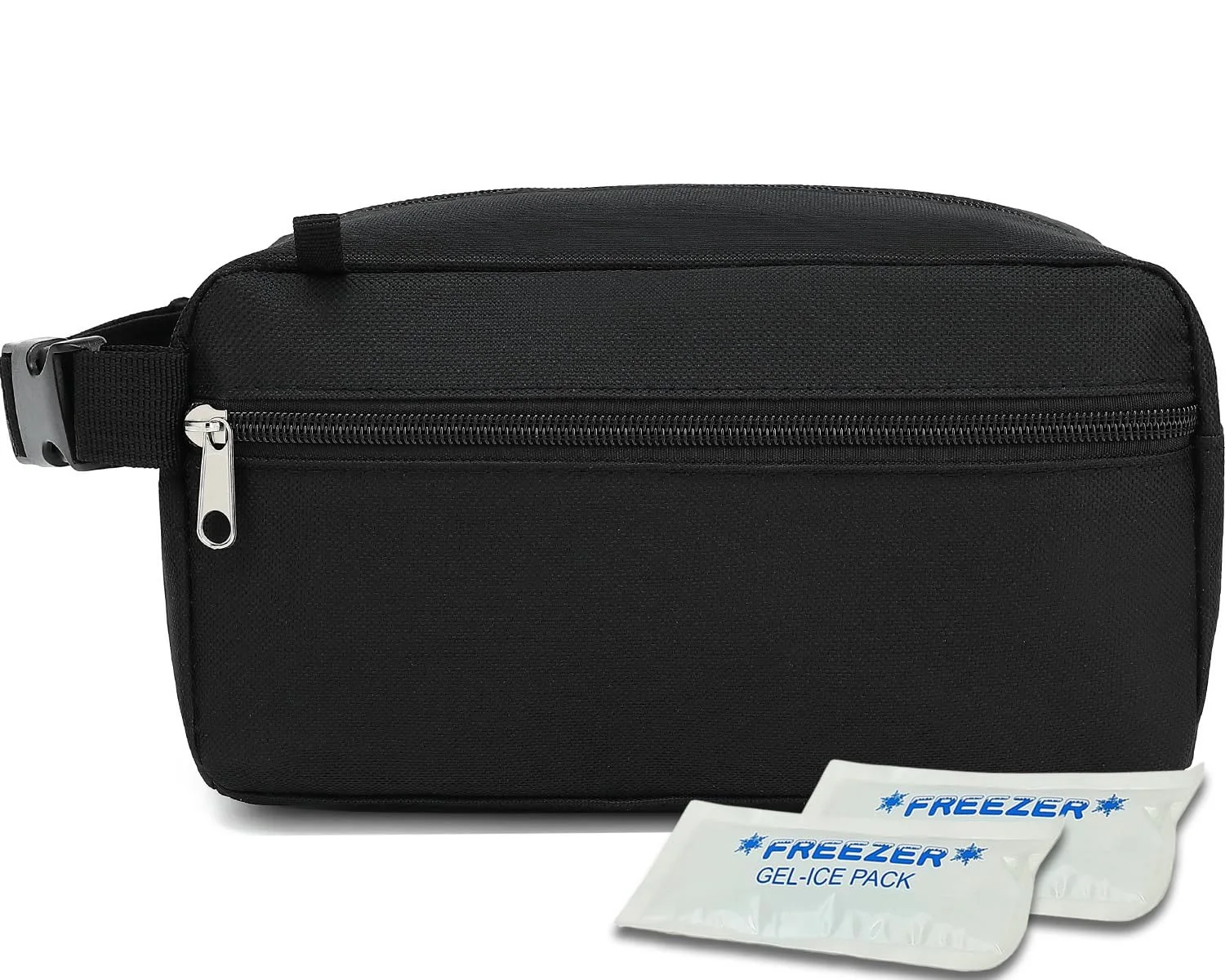
Two cold sources, one above and one below
The rule that does most of the work is a count. USDA says to pack at least two cold sources with perishable food: two frozen gel packs, each no smaller than 5 x 3 inches, or one gel pack plus a frozen juice box or a frozen bottle of water. Place one under the food and the other on top of it, so the sandwich sits between them.
Our insulated snack bag comes with two removable gel ice packs. Freeze them overnight, and in the morning lay one flat on the bottom, the food in the middle and the second pack over it. Before the first school day, hold each pack against a ruler: USDA's measure is 5 x 3 inches per pack, and a frozen juice box can take the place of one that comes up short.
The bag measures 9 x 4.5 x 5 inches and holds 3.3 liters, enough for a yogurt, cut fruit and a few vegetables with the two packs around them. Its shell is 600D Oxford fabric over 5 mm EPE foam, with a PEVA lining you wipe out by hand. A front zipper pocket takes the spoon and the napkins. It comes in black, pink, purple and three checks: gray, khaki and green.
The 40 to 140 degree range and the clock
Bacteria multiply fastest between 40 and 140 degrees F, a range both USDA and FoodSafety.gov name. Your fridge at home sits on the safe side of it, since FoodSafety.gov says a refrigerator should run at 40 degrees F or below. Once a perishable lunch leaves that shelf, it starts warming toward the range, and the cold sources are there to hold it back.
Then comes the clock. Perishable food should not sit out for more than 2 hours, and the limit drops to 1 hour when the air is above 90 degrees F. FoodSafety.gov names the two places most families meet that heat in July: a hot car and a summer picnic. Food that has been out in that heat should go into a fridge within 1 hour.
Loading the bag in the right order
- Get the food ready first and take the gel packs out of the freezer last.
- Lay one pack flat on the bottom of the insulated bag.
- Put the perishable food on it: the sandwich, the yogurt, the cut fruit or last night's leftovers.
- Lay the second pack, or a frozen juice box, on top.
- Close the zipper and clip the buckle handle to a backpack, a tote, a gym bag or a stroller.
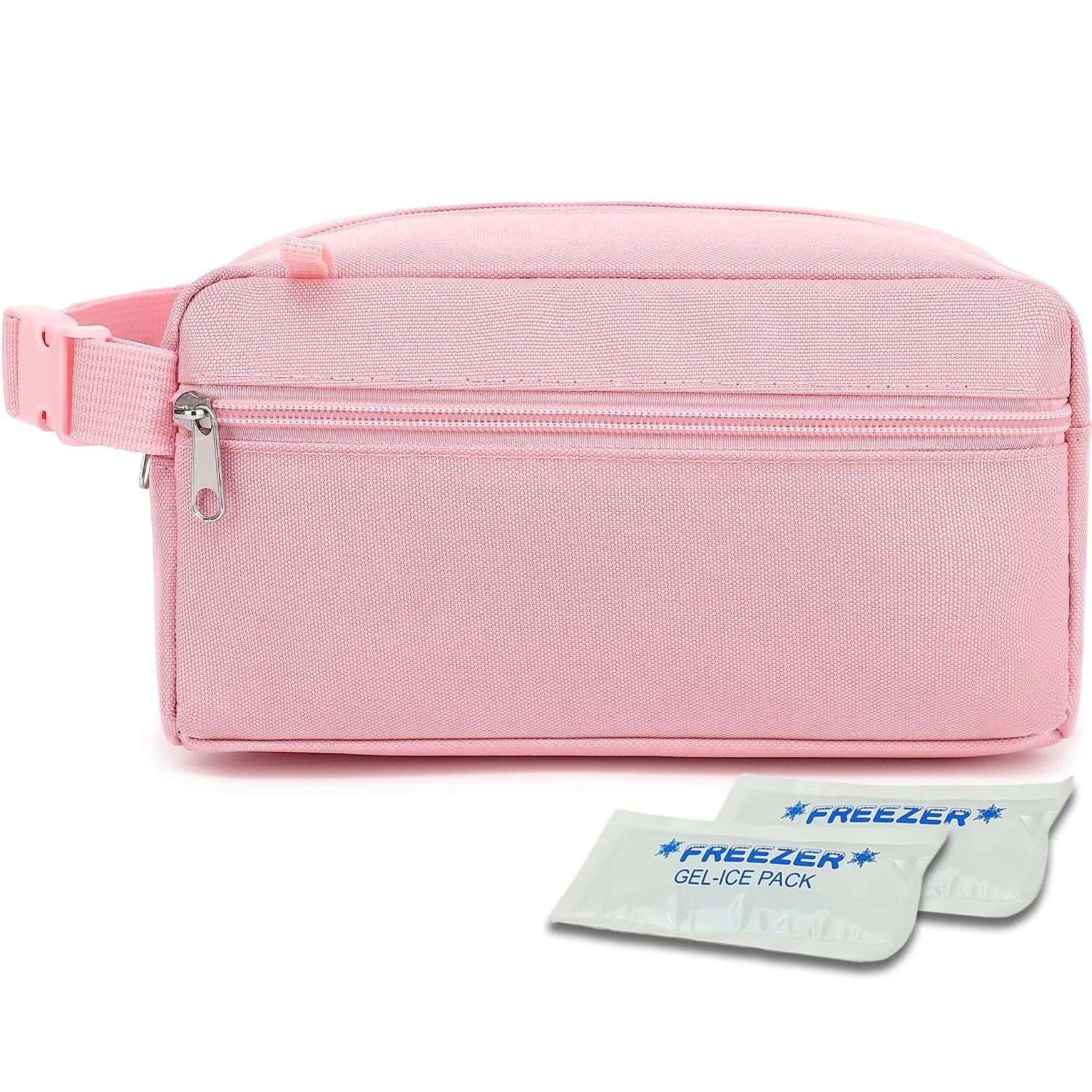
Sandwiches can go in frozen as well, so the bread starts the day cold. USDA draws one line here: do not freeze a sandwich made with mayonnaise, lettuce or tomatoes. Add those at lunch, or pack them in a small container of their own.
At work, a fridge changes the plan. If one is free, put the whole bag inside with the zipper open: USDA's advice is to leave the lid or bag open so cold air can keep the food cold.
What goes in a sandwich bag and what goes in the cooler
A reusable sandwich bag and an insulated snack bag do different jobs. Our reusable sandwich bag has an outer fabric layer, a food-grade PEVA lining, a zipper a child of 3 or older can work, and a loop handle for carrying. It is not insulated. Nor is it airtight, because the zipper lets a little air through.
That makes it the home for dry food: chips, crackers, pretzels and other dried foods, eaten within 24 hours so they stay crisp. A perishable sandwich can ride in it too, as long as the sandwich bag goes into the insulated bag, between the two cold sources.
| Food | Where it rides | Why |
|---|---|---|
| Deli meat or egg sandwich | Sandwich bag, inside the insulated bag between two cold sources | Perishable: the two-cold-source rule applies |
| Yogurt, cut fruit, leftovers | Insulated bag, between the packs | Perishable food |
| Washed whole fruit | Sandwich bag | The PEVA lining sits between the fruit and the fabric |
| Chips, crackers, pretzels | Sandwich bag | Not airtight, so eat within 24 hours |
| Spoon, fork, napkins | Front zipper pocket of the insulated bag | Out of the food compartment |
| Frozen juice box or water bottle | On top of the food in the insulated bag | USDA counts it as a cold source |
The sandwich bag measures 8 x 7.5 inches and comes in dinosaur, astronaut, car, shark and dinosaur fossil prints, with the car print also sold as a pair. Away from lunch, it works as a pencil case or a small pouch for cosmetics.
Washing both bags
Put the sandwich bag on the top rack of a dishwasher, or wash it by hand, which gives it a longer life. Wipe it, rinse it, and stand it upside down over a cup to air dry with the opening hanging free.
Treat the insulated snack bag differently, because it is hand wash only. Wipe the PEVA lining clean, leave the zipper open until the inside is dry, and fold the bag flat for the cupboard. The ice packs go back in the freezer that evening, ready for the next morning.
Beach days, picnics and the car
Summer outings are where the 1-hour limit bites. A lunch bag left on the back seat while you run errands is exactly the hot car FoodSafety.gov describes. The buckle handle helps here: clip the snack bag to the tote you carry anyway, and the food goes where you go.
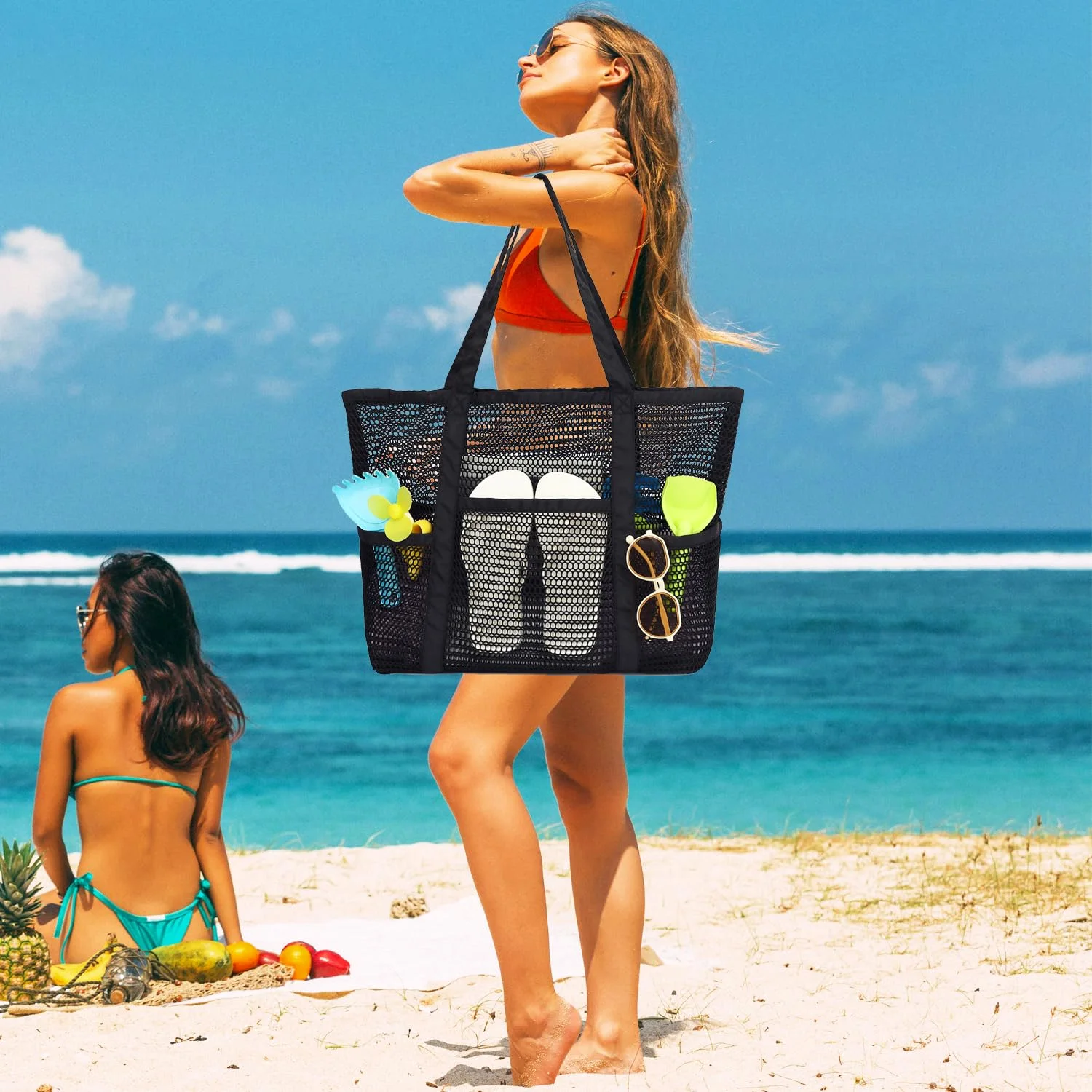
On the beach, the snack bag rides inside or on the side of a larger tote with the towels and the sunscreen. For the rest of that load, read how to pack a beach bag, and for the bags themselves, the mesh beach bags carry rows of outer pockets for the small things. The whole range is in the shop.
Every product named here belongs to the Fammart beach line.